
NVIDIA Corporation: A Fenestra Favourite
May 20, 2026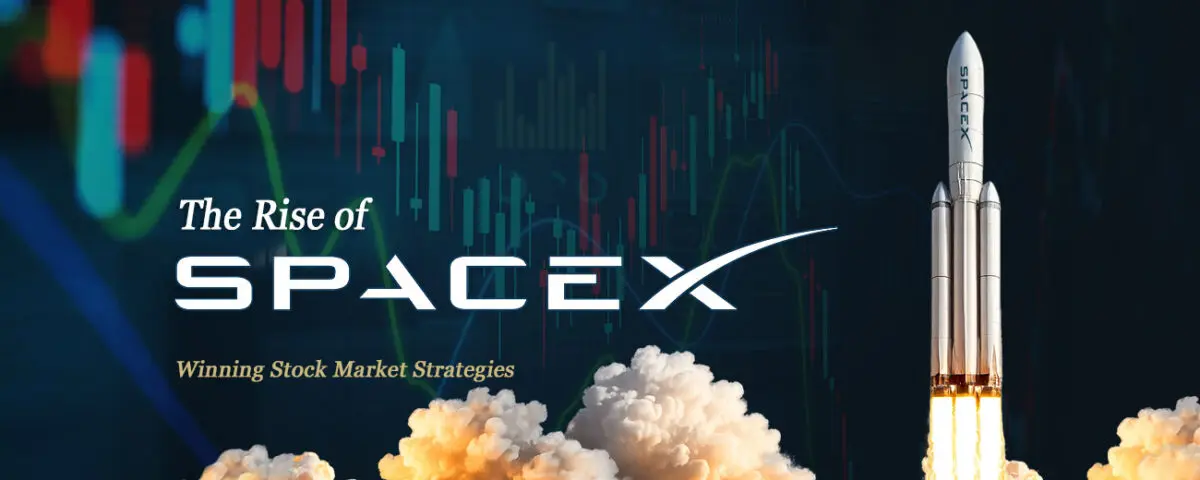
SpaceX’s Historic Nasdaq Listing
SpaceX listed on the Nasdaq on 12 June 2026 under the ticker SPCX in the largest initial public offering in recorded financial history. The company raised $75 billion at $135 per share, implying an opening market capitalisation of $1.77 trillion. Four trading sessions later, SPCX is changing hands at $198.97 – a 47.4% premium to the IPO price – with an intraday high today of $225.64 and a market capitalisation of approximately $2.52 trillion. SpaceX has, in a single week, become the sixth-most-valuable company on earth.
Why Fenestra Did Not Recommend Chasing the IPO? This is not the entry point Fenestra clients were advised to wait for.
Price Matters More Than Hype
Our prior SPCX research, published in the AI Trilogy report (June 2026), was explicit: Do Not Chase the IPO. Our preferred accumulation window was weeks four through eight post-listing, and the post-lockup expiry dip at 180 days. That guidance rests on a principle central to Fenestra’s philosophy, inherited from Buffett and Graham: price matters. The quality of an asset is irrelevant if you overpay for it. At $198.97, SPCX trades at approximately 135 times FY2025 revenue of $16.8 billion- and 85-100-times FY 2026 consensus estimates of $25-30 billion. These multiples embed near-perfection. The margin of safety is, by any GARP metric, absent.
What Makes SpaceX a Generational Business
Let us be direct about what SpaceX is. It is one of the most extraordinary companies in the history of capitalism – a vertically integrated aerospace and communications monopoly that has disrupted the global launch market and built the world’s first commercially viable low-earth orbit broadband network. Starlink generated $11.4 billion in FY2025 revenue – up 48% year on year – serving 10.3 million active subscribers across 160 countries as of Q1 2026. It produced $4.4 billion in operating profit, the only consistently profitable segment in the business. The total company achieved $8 billion EBITDA at a 43% margin, and FY2026 free cash flow is projected to reach approximately $5 billion for the first time.
The xAI Merger Adds Opportunity and Risk
The xAI merger adds optionally but also risk. SpaceX burned $8 billion in cash in 2025 to fund a $20 billion data centre programme – Starship enabled orbital AI infrastructure that could, if delivered, compress compute economics by an order of magnitude. Q1 2026 net income was GAAP loss of $4.28 billion – the largest quarterly loss in the company’s history – entirely attributable to this investment cycle. SpaceX also holds 18,712 Bitcoin valued at approximately $1.2 billion. The next earnings date is 2 September 2026.
Governance and Elon Musk Key-Person Risk
Governance is a material and unresolved concern. The S-1 discloses super-voting Class B shares that give Elon Musk permanent control irrespective of public shareholder composition. Musk simultaneously oversees Tesla, xAI, X, Neuralink, and the Boring Company. His attention is the scarcest resource in the SpaceX investment thesis. The market, at $2.52 trillion, is betting heavily on him. Fenestra is more circumspect.
Post-IPO Price Action and Market Expectations
Post-IPO price action has been driven by institutional index front-running and retail FOMO – not fundamental re-rating. Day one volume exceeded 500 million shares; day two saw a further 244 million. The Wall Street consensus 12-month price target is $164 – 17.6% below today’s price – with a high of $227 and a low of $63. Damodaran’s independent DCF implies a Starlink-only value of $700B-1.0T; everything above that is Starship optionality and the xAI orbital compute thesis. The current price is already pricing the bull case.
Fenestra’s Valuation Framework
Fenestra’s three-scenario valuation framework generates a base-case intrinsic value of approximately $1.62 trillion (implied share price: ~$128) and a bull case of $3.0 trillion (~$237 per share). Our bear case – predicted on ARPU compression, Starship delays, and AI commoditisation – returns approximately $750 billion (~$59 per share). At $198.97, the market sits squarely at the top of the bull range with zero cushion. Fenestra does not buy bull cases at full price.
Fenestra Rating: Hold, Do Not Chase
Our rating therefore changes from WATCH / ACCUMULATE to HOLD – DO NOT CHASE. Existing holders allocated at $135 have earned 47.4% in four days and should consider trimming to a maximum 5% portfolio weighting. New buyers should await a pullback to our target entry range of $145-$165 – a 17-27% correction from current levels – or the post-lockup expiry dip in December 2026, when insider selling typically creates a more rational entry point.
Final Investment View
SpaceX is a generational asset. But generational assets bought at the wrong price become poor investments. The discipline that kept Fenestra clear of Steinhoff, Tongaat Hulett, African Bank, and EOH – where narrative overwhelmed valuation – is the same discipline that guides this recommendation. We will not be the last buyers at the top. We will wait for our price.
If you are not happy with your portfolio performance or would like a second opinion, please do not hesitate to contact Fenestra for a free review of your portfolio.
William Meyer – 079 624 4031
AI used William Meyer to write this article.
Frequently Asked Questions
1. Is SpaceX a good long-term investment?
SpaceX may be considered a generational business because of its leadership in aerospace, satellite broadband through Starlink, and future opportunities linked to Starship and orbital infrastructure. However, even exceptional companies can become poor investments if bought at the wrong price.
2. Why does Fenestra recommend “Hold, Do Not Chase” on SpaceX?
Fenestra’s view is that the current share price already reflects a strong bull-case valuation. With limited margin of safety at the current level, new investors may be better served by waiting for a pullback or a more rational entry point after the post-lockup expiry period.
3. What makes Starlink important to the SpaceX investment case?
Starlink is a key part of the SpaceX growth story because it provides recurring revenue through its low-earth orbit broadband network. It is also described in the article as the company’s only consistently profitable segment, making it central to the valuation case.
4. What are the biggest risks for SpaceX shareholders?
The major risks include overvaluation, Starship delays, xAI-related investment losses, governance concerns, Elon Musk key-person risk, ARPU compression, and the possibility that future AI infrastructure economics become more competitive or commoditised.
5. When could SpaceX become more attractive to new investors?
According to Fenestra’s view in the article, new buyers should consider waiting for a pullback into the target entry range of $145-$165, or for the post-lockup expiry dip in December 2026, when insider selling may create a more attractive buying opportunity.